
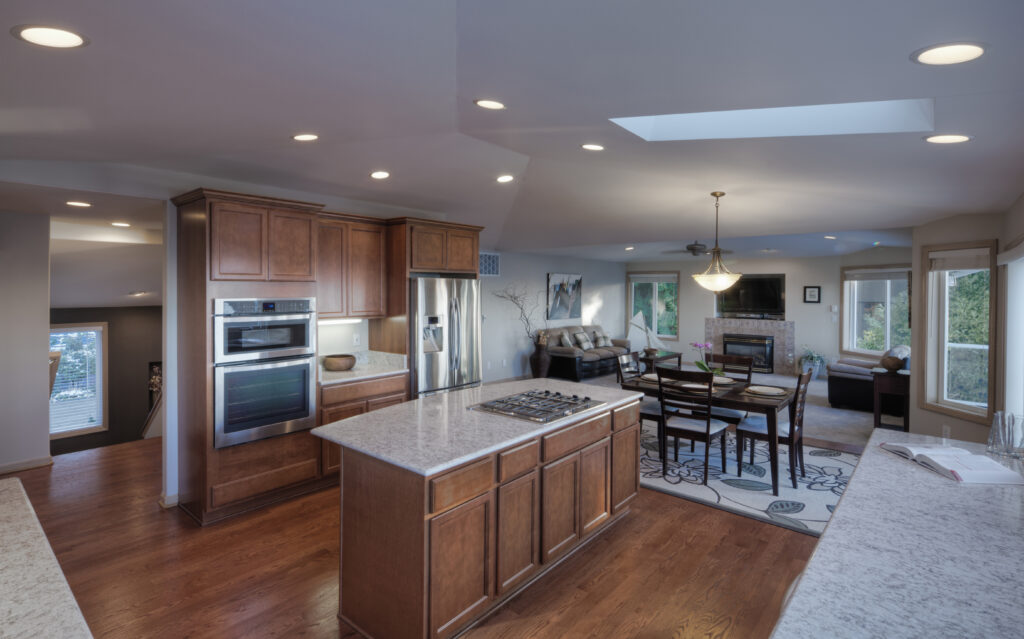
Open-concept kitchens have become one of the most sought-after remodeling trends in modern home design—and for good reason. By removing barriers and blending the kitchen with adjacent living or dining areas, you create a welcoming, airy environment that encourages social interaction, improves natural light flow, and makes your space feel larger.
Whether you’re planning a major remodel or considering a few strategic updates, understanding the benefits, design considerations, and key steps involved in creating an open-concept kitchen will help ensure your renovation is both beautiful and functional.
Why Homeowners Love Open-Concept Kitchens
1. More Natural Light
Walls can block sunlight and make your home feel darker and smaller. Removing them allows light from windows in adjoining rooms to spread throughout the space, creating a brighter and more inviting atmosphere.
2. Better for Entertaining
When the kitchen flows seamlessly into the living or dining room, you can prepare food and still be part of the conversation. No more feeling isolated while guests are in another room.
3. Improved Functionality
An open floor plan lets you arrange furniture and appliances more efficiently. This can increase counter space, create better traffic flow, and make the kitchen easier to navigate during busy times.
4. Increased Home Value
Buyers often view open layouts as more modern and versatile, which can make your home more attractive on the market.
Planning Your Open-Concept Kitchen
Step 1: Evaluate Your Current Layout
Look at how your kitchen connects to nearby rooms. Which walls are load-bearing? How is the plumbing and electrical arranged? Understanding your existing structure will help determine the scope of your project.
Step 2: Set a Realistic Budget
Costs can vary greatly depending on whether you’re simply removing a non-load-bearing wall or completely reconfiguring the space. Be sure to budget for:
- Demolition
- Structural work (if removing load-bearing walls)
- Electrical and plumbing adjustments
- Flooring and ceiling updates
- New cabinetry or appliances
Step 3: Work with a Professional
An open-concept kitchen involves more than just knocking down walls. A designer or contractor can help ensure your renovation meets building codes, maintains structural integrity, and maximizes both style and functionality.
Design Elements to Consider
1. Kitchen Islands as the Centerpiece
An island is a natural focal point in an open-concept kitchen. It can provide:
- Extra counter space for cooking
- Additional storage
- A casual dining area with bar stools
- A spot for friends and family to gather
Tip: Consider adding a sink or cooktop to your island for even more functionality.
2. Flooring for a Seamless Look
Using the same flooring material throughout the kitchen and adjoining spaces will visually connect the rooms. Popular choices include hardwood, luxury vinyl plank, and large-format tile.
3. Lighting Layers
Without walls, you’ll need to think strategically about lighting. Combine:
- Ambient lighting (recessed ceiling lights)
- Task lighting (under-cabinet LEDs)
- Accent lighting (pendants over the island)
4. Color Schemes
Use a consistent color palette across your open spaces to maintain visual flow. Neutral tones with pops of color in decor or accessories work well for a timeless look.
5. Storage Solutions
With fewer walls, you may lose some upper cabinet space. Offset this with:
- Tall pantry cabinets
- Pull-out drawers
- Multi-functional islands
- Open shelving for style and convenience
Challenges to Watch Out For
While open-concept kitchens have many benefits, they also come with potential downsides:
Noise Control
Without walls, kitchen sounds travel more easily. Using soft furnishings like rugs, curtains, or upholstered furniture can help absorb noise.
Cooking Odors
Smells can linger in connected living spaces. A powerful range hood or ventilation system is a must.
Loss of Privacy
If you enjoy keeping cooking messes out of sight, an open layout may not be ideal. Creative use of partial walls, glass dividers, or sliding barn doors can offer flexible separation when needed.
Step-by-Step Guide to Creating an Open-Concept Kitchen
- Consult a Professional
Before any demolition, hire a licensed contractor or structural engineer to assess your home. They’ll determine which walls can be safely removed. - Develop a Detailed Design Plan
Work with a designer to map out the new layout, cabinetry placement, appliance locations, and lighting scheme. - Secure Permits
Many municipalities require permits for structural changes, electrical rewiring, or plumbing work. - Demolition and Structural Work
Remove the targeted walls and, if necessary, install beams or supports to replace the load-bearing function. - Install New Electrical and Plumbing
Relocate outlets, light fixtures, or plumbing lines as needed for your new layout. - Finish Surfaces
Lay new flooring, repair or replace the ceiling, and paint walls in your chosen color palette. - Install Cabinetry and Appliances
Add your island, cabinets, and appliances according to your design plan. - Add Lighting and Final Touches
Complete the look with light fixtures, hardware, backsplashes, and decor.
Cost Considerations
While costs vary by region and scope, here’s a general breakdown:
- Removing a non-load-bearing wall: $500–$2,000
- Removing a load-bearing wall: $3,000–$10,000+ (depending on beam size and engineering needs)
- Full kitchen remodel with open layout: $25,000–$75,000+
Investing in quality materials and professional craftsmanship ensures your open-concept kitchen will be durable, functional, and beautiful for years to come.
Styling Tips for Your Open-Concept Kitchen
- Define Zones with Rugs – Area rugs can help distinguish the kitchen, dining, and living zones without physical barriers.
- Mix Materials – Combine wood, stone, and metal finishes for visual interest.
- Add Greenery – Plants soften the space and add a natural element.
- Use Statement Lighting – Oversized pendants or chandeliers make a bold design impact.
- Incorporate Personal Touches – Display cookbooks, art, or family photos to make the space feel warm and inviting.
Final Thoughts
An open-concept kitchen renovation is more than a design trend—it’s a lifestyle upgrade. By breaking down walls and uniting your kitchen with your living and dining areas, you create a brighter, more social, and more functional home environment.
Whether you opt for a modest wall removal or a full-scale remodel, the key is thoughtful planning and professional guidance. With the right approach, your open-concept kitchen will become the heart of your home—a space where cooking, entertaining, and everyday living flow together beautifully.
